Case study 01
Haven
VR
A room you can step inside and breathe in
A speculative-design project imagining what mindfulness looks like when you can step inside it. Built with a team of six.
a room
to breathe in
Japandi calm, ambient sound, opt-in company.
Role
UX Designer
Team
Team of 6
Duration
4 weeks
Tools
Unity · Figma · Milanote
project
Overview
Haven VR is a collaborative team project exploring how virtual reality can support mindfulness through immersive, interactive environments — and how quiet social features can help people actually stick with the practice.
Outcome
A tested Unity prototype + full research artefact.
Most meditation apps get downloaded, then abandoned. We wanted the opposite — a place you actually want to come back to.
my
Role
Contributions
- Led concept development, design research and moodboarding
- Designed and built the VR meditation environment in Unity
- Designed and developed interactive features and activities
- Supported iteration and next-step recommendations from user testing
Team structure
the
Problem
Most digital meditation solutions lack immersion and meaningful social interaction — making it hard for users to stay engaged, consistent, or feel supported by a community.
the
Solution
An immersive VR meditation retreat that deepens mindfulness through calming environments, interactive rituals, and optional low-pressure social connection.
chapter one
Empathize
Desk research, wellness studies, and honest conversations with people who kept re-downloading the same meditation apps.
User research
The team started with market research on mindfulness apps, VR wellness studies and burnout in demanding professions. We combined desk research with informal user conversations to understand why so many meditation apps get downloaded, then abandoned.
Key insights
Users struggle with consistency
Many find it hard to maintain regular meditation habits because engagement drops fast.
Meditation apps feel passive
Existing solutions lack immersion, making it harder for users to stay focused.
Accessibility is a barrier
Time, cost and travel prevent users from engaging with in-person wellness.
Immersion grows engagement
VR environments create stronger presence and improve mindfulness experiences.
Social interaction motivates users
Optional, low-pressure social features can meaningfully improve engagement.
20+
Interviews & surveys
Across students and full-time professionals
5
Insights that mattered
Boiled down from a much longer list
4wk
From brief to Unity build
Six-person team, tight turnaround
chapter two
Define
A problem sharp enough to design against — personas, a statement, three how-might-we's.
Problem statement
Users struggle to stay consistent with meditation due to a lack of immersive, engaging experiences — and limited opportunities for meaningful social connection around the practice.
Personas
Alex Baker, 32 (he/him)
Marketing Manager
Alex experiences high stress from a demanding job and struggles to maintain work-life balance. He wants a convenient way to relax and disconnect but lacks time and budget for in-person retreats.
Goals
- Reduce stress and disconnect from work
- Access quick, effective meditation
- Engage in mindfulness without distractions
- Connect with others in a low-pressure environment
Sophia Ashford, 34 (she/her)
Wellness Coach
Sophia is passionate about mindfulness but finds existing meditation apps unengaging and limited. She's eager to explore new technologies to enhance her practice and better support her clients.
Goals
- Create more immersive meditation experiences
- Stay consistent with mindfulness practices
- Build community through group sessions
- Introduce innovative wellness tools to clients
how might we
- — create a more immersive meditation experience?
- — make mindfulness more accessible and engaging?
- — incorporate social interaction without overwhelming users?
chapter three
Ideate
A moodboard turned into a metaphor: nature as the interface.
Concept direction
The goal was a virtual meditation retreat that combined guided mindfulness with meaningful interaction. Rather than replicating a traditional meditation app, we wanted users to feel fully immersed in a calming environment that encouraged relaxation, reflection, and optional social connection.
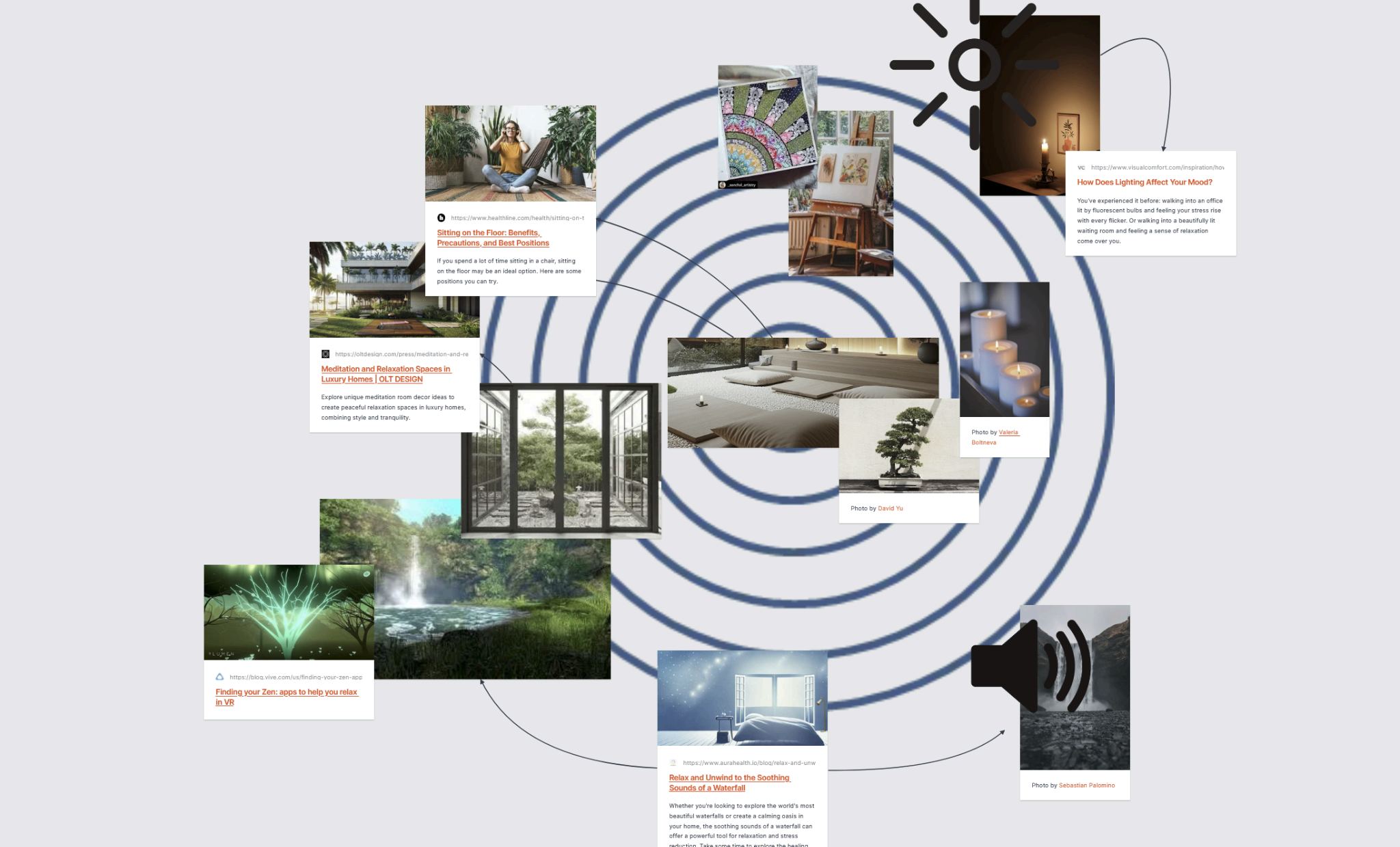
We built the moodboard in Milanote, pulling architecture, nature, lighting and sound references into one place until a single direction held: a Japanese-inspired retreat where nature is the interface.
The moodboard, explained
Six clusters, six decisions
Every reference had to answer one question: how does this make someone's shoulders drop? Here's what each cluster turned into inside the build.
01
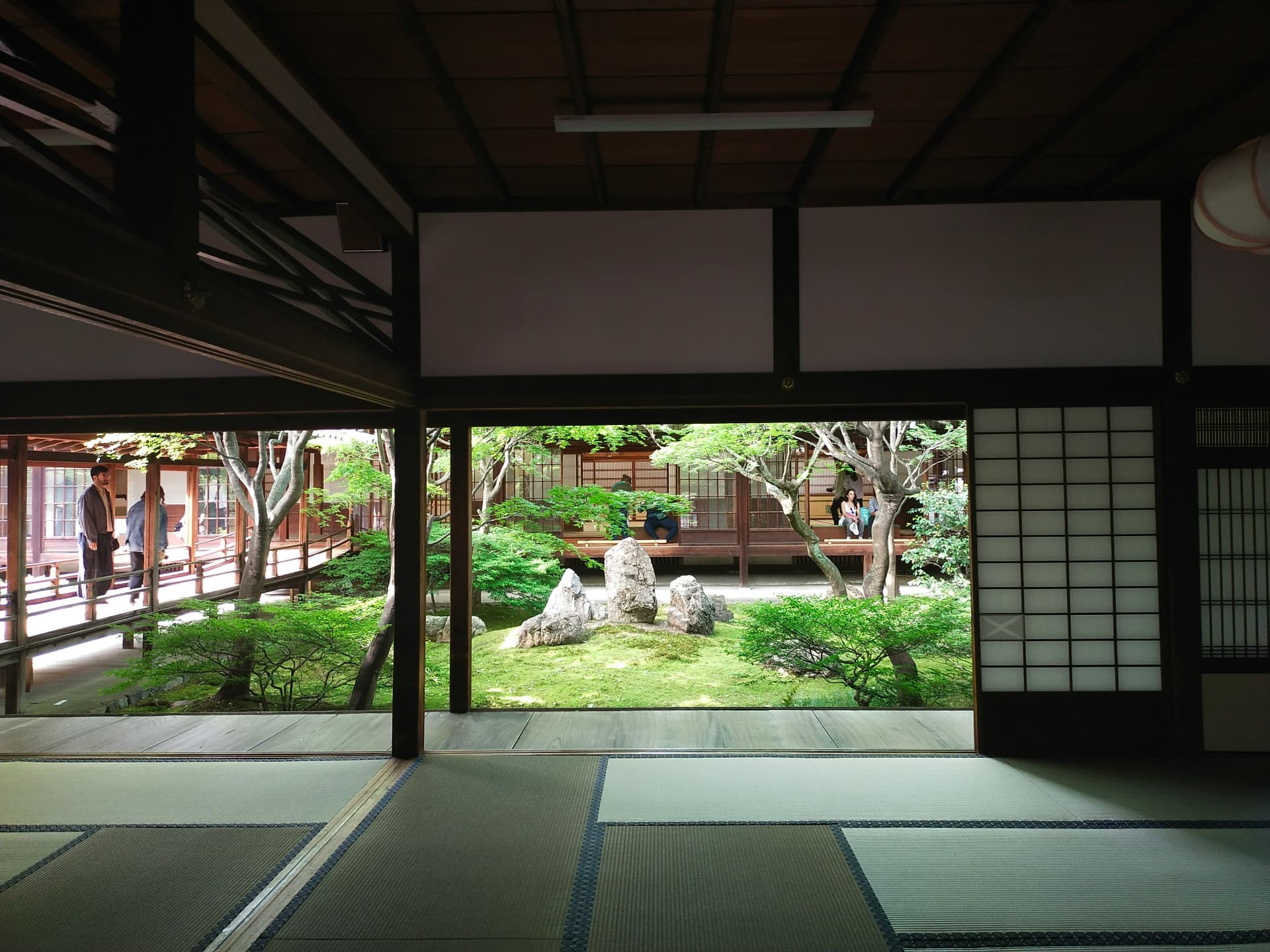
Japanese architecture
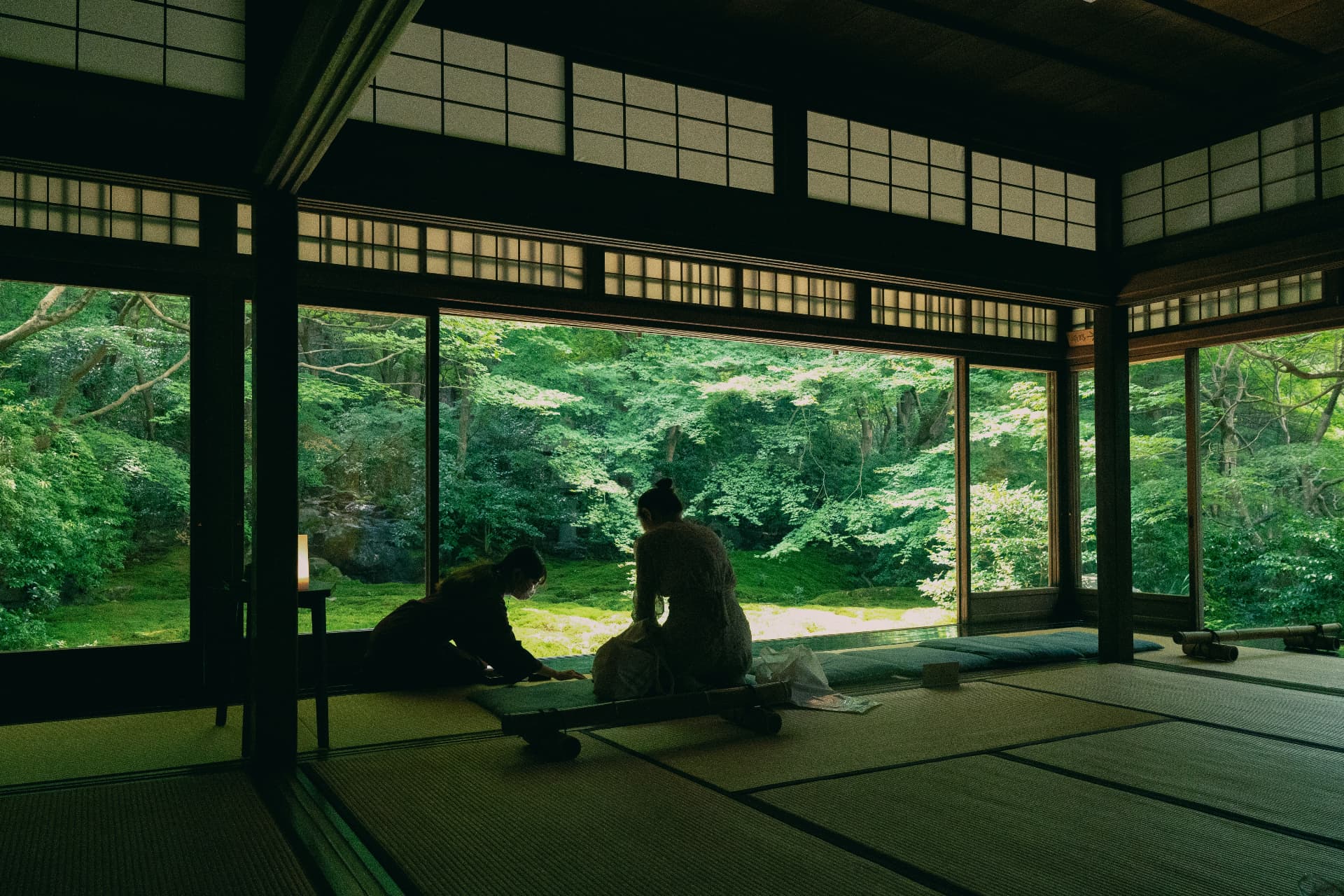
Shoji screens, low horizons and timber framing — structure that feels quiet rather than empty.
02
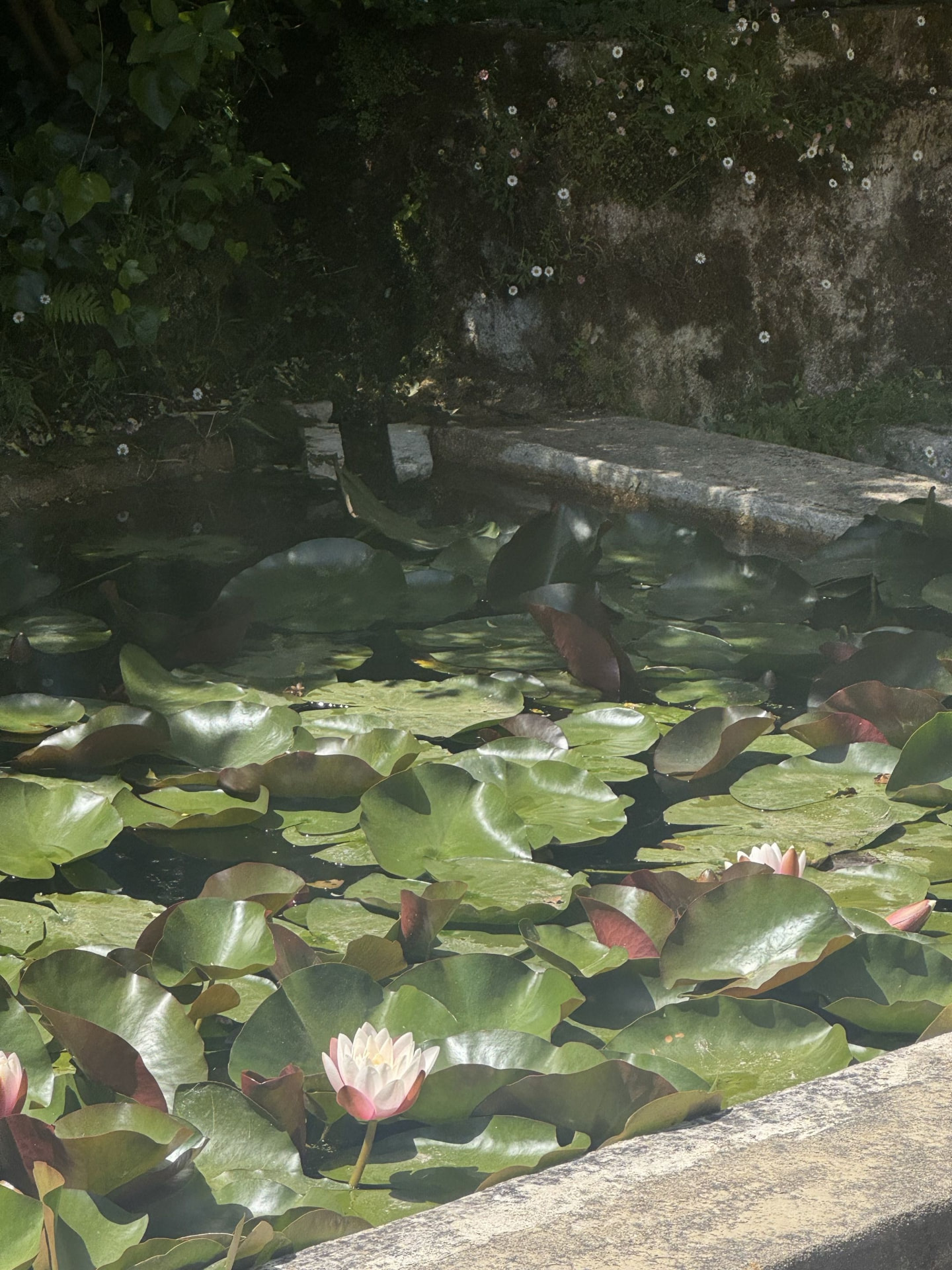
Nature & water
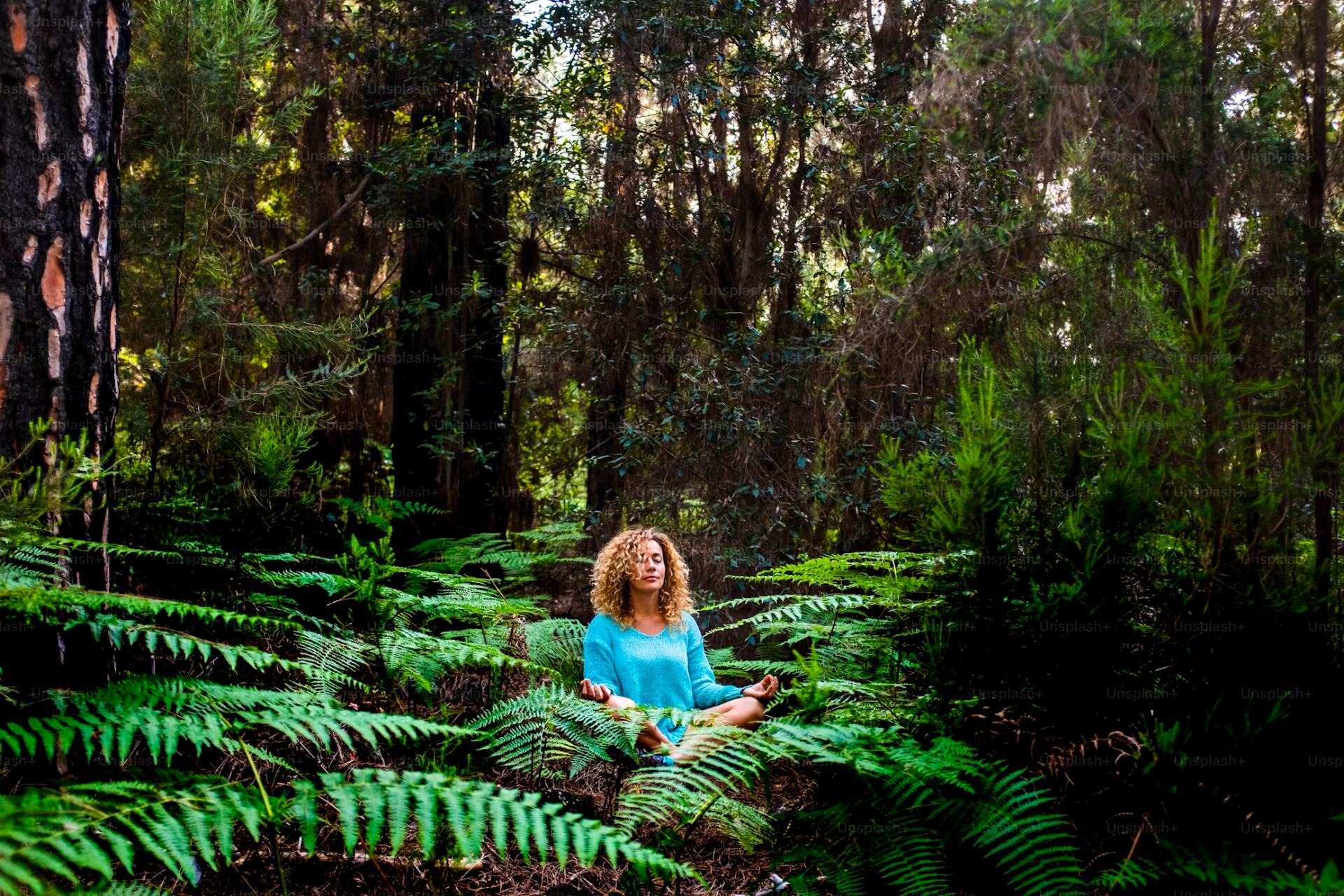
Gardens, waterfalls and greenery: the research kept pointing back to natural settings lowering stress.
03
Warm light
Candlelight and late-afternoon tones instead of clinical white — light that signals 'slow down', not 'perform'.
04
Floor seating
Cushions in a circle, everyone at the same height — social presence without confrontation.
05
Reflective art
Painting and colouring references, backing the second task: a wordless way to process a session.
06
Ambient sound
Waterfall and wind loops so the space is carried by audio as much as by what you can see.
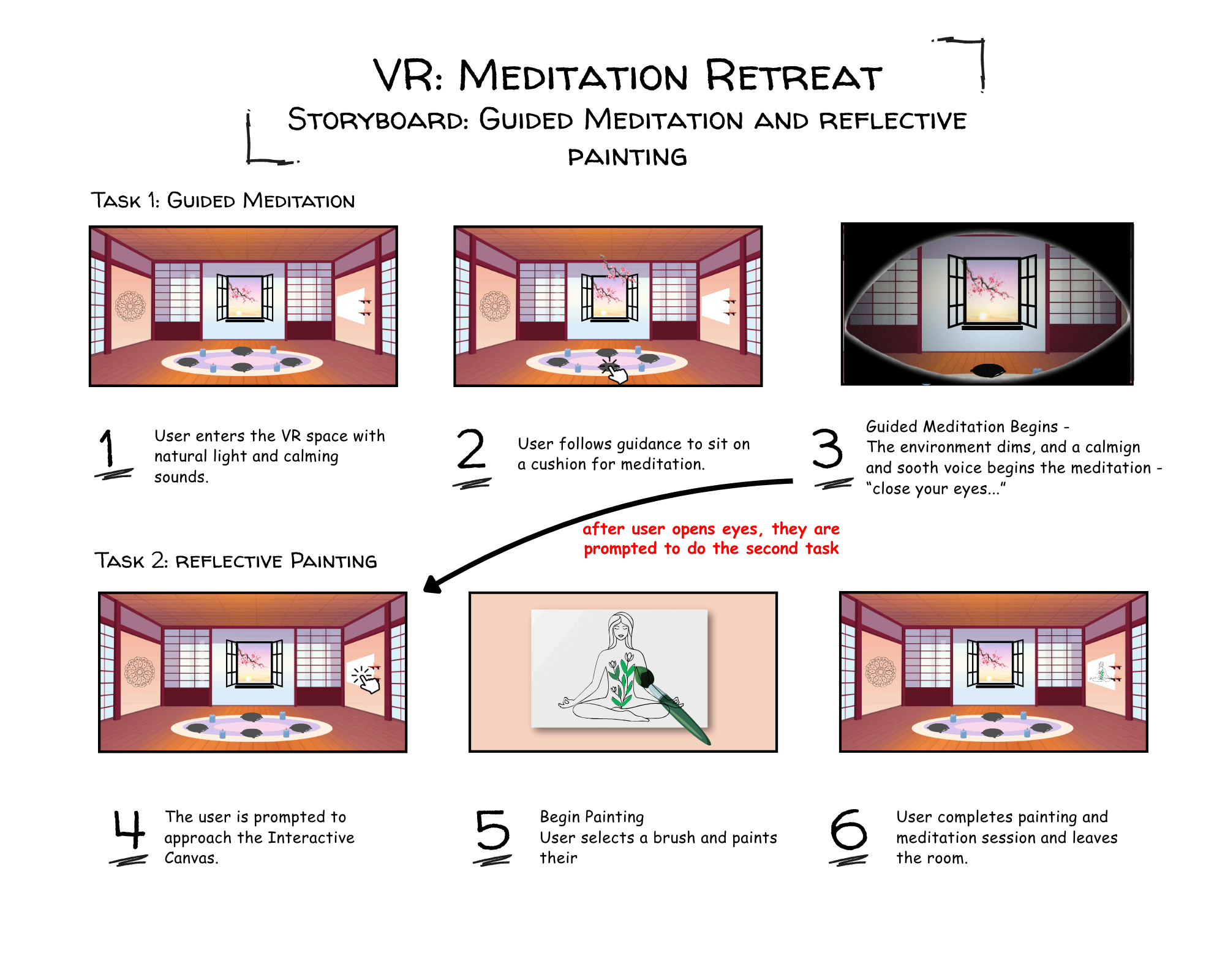
Storyboarding
Two tasks, six frames
Before touching Unity we storyboarded the whole session end to end: guided meditation first, reflective painting second, with the handoff between them as the moment that had to feel natural.
chapter four
Prototype
Built in Unity — the environment first, then the interactions that earn their place in it.
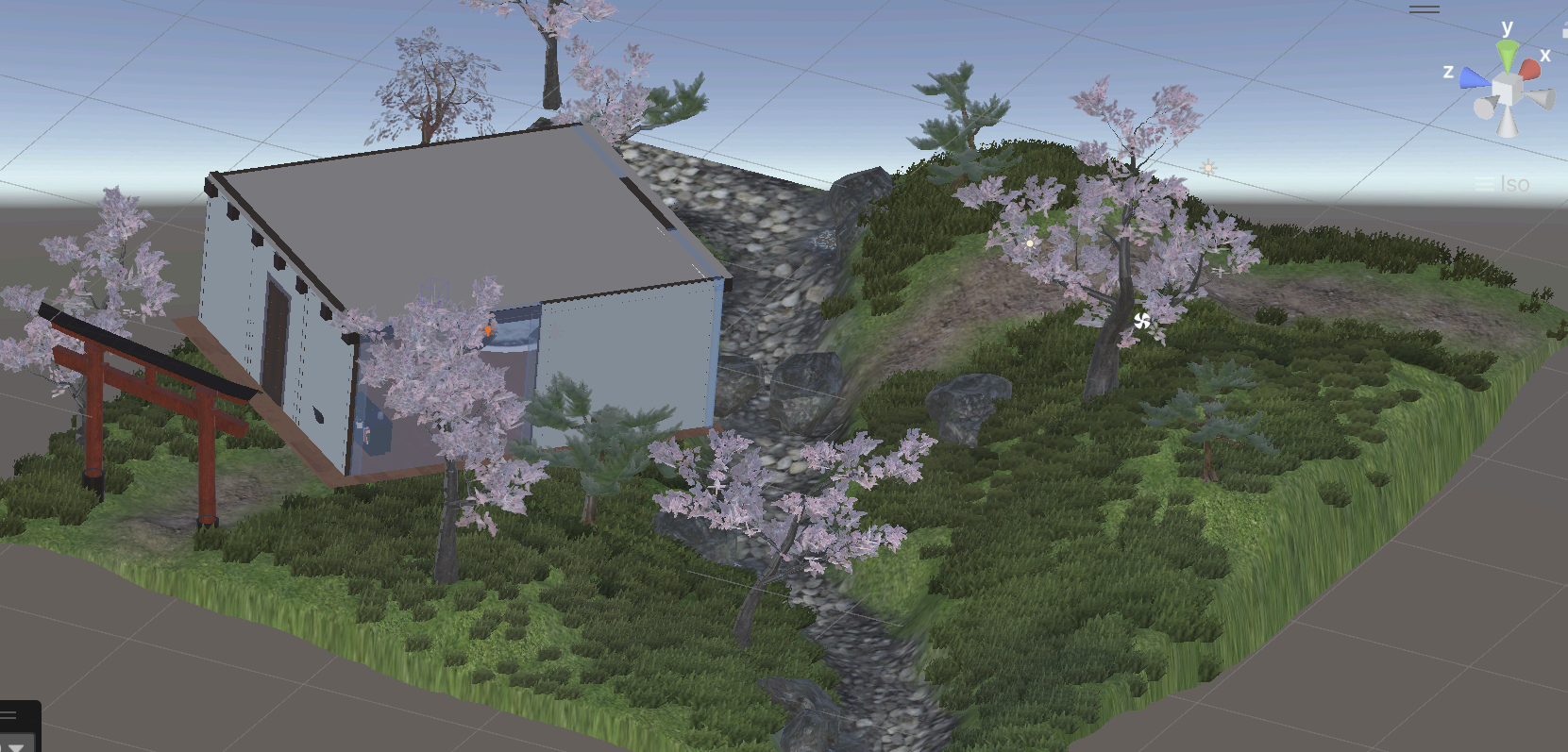
The retreat was built in Unity by our six-person team and tested through the XR Device Simulator, since none of us had headsets. Each piece of the scene had to pass the same test: does it help someone settle, or does it ask something of them?
01
The garden
We started outside the room. A Japanese garden — torii gate, cherry blossoms, stone path and greenery — was assembled first so that whatever we built inside would always have somewhere calm to look out onto.
What it does
Users spawn seated facing it. No menu, no tutorial wall: the first thing you do is look.
02
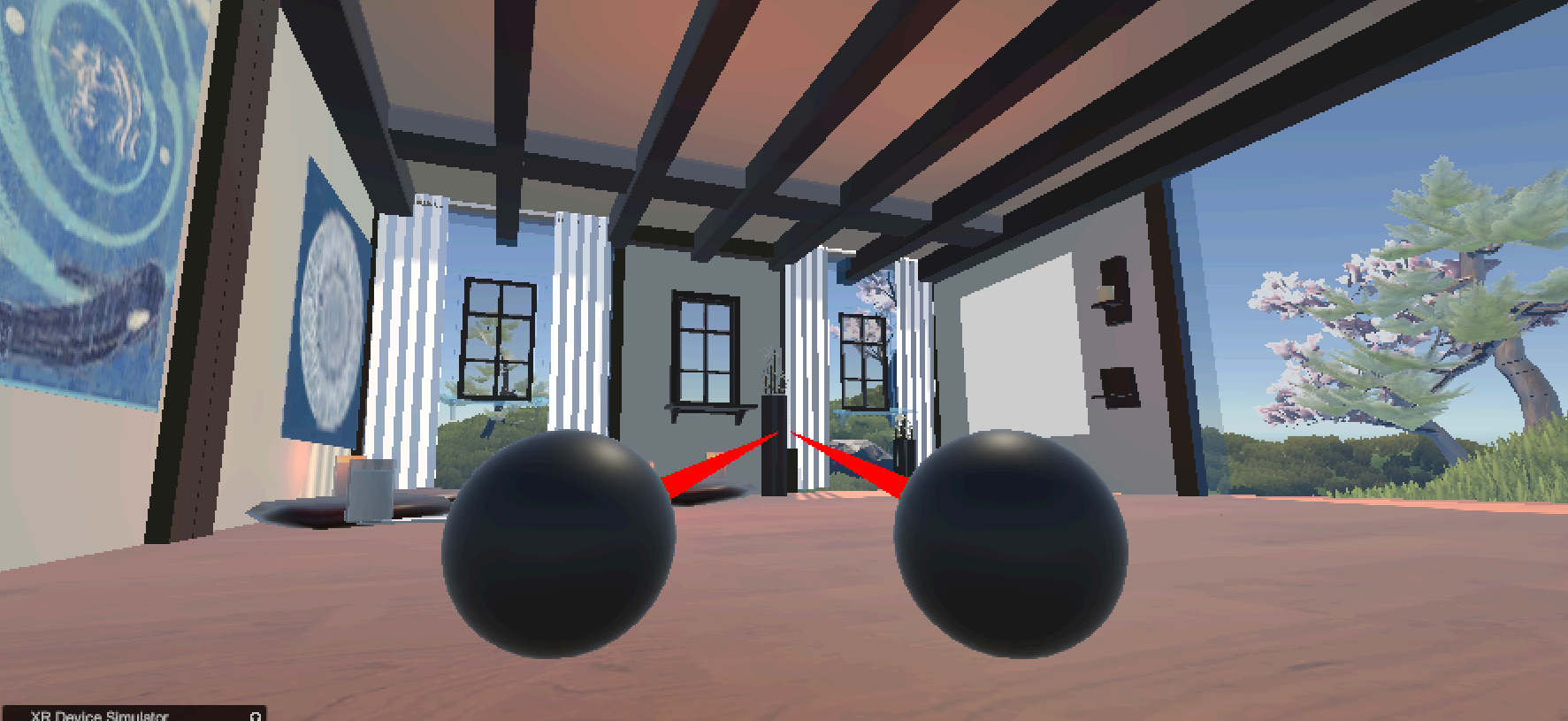
The room
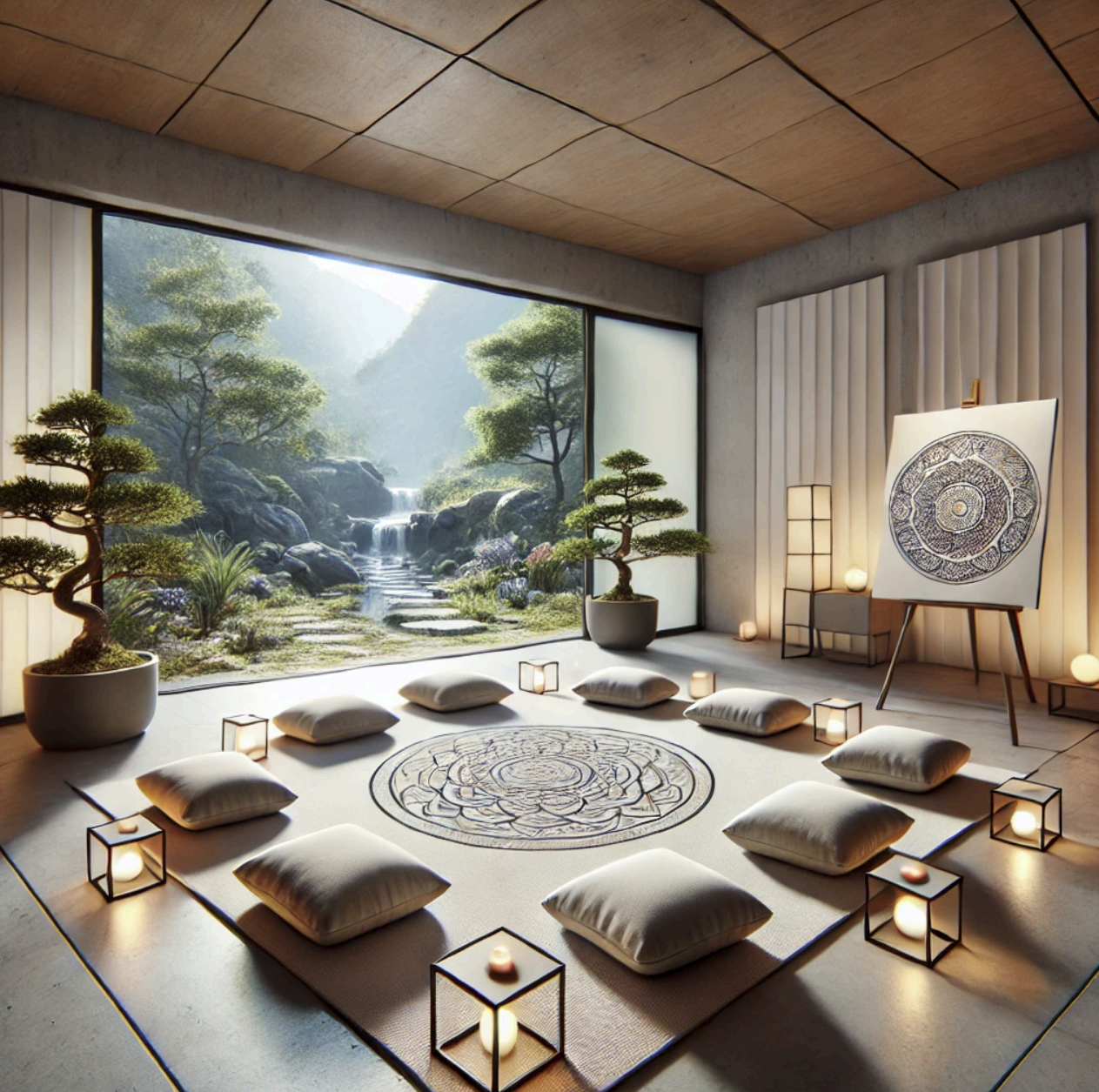
The interior went in next at true VR scale: timber beams, mandala wall art, curtains and windows framing the garden. Seated eye height drove every placement, so nothing important sits above the horizon.
What it does
Low visual load was the rule — nothing in the room competes for attention with the view.
03
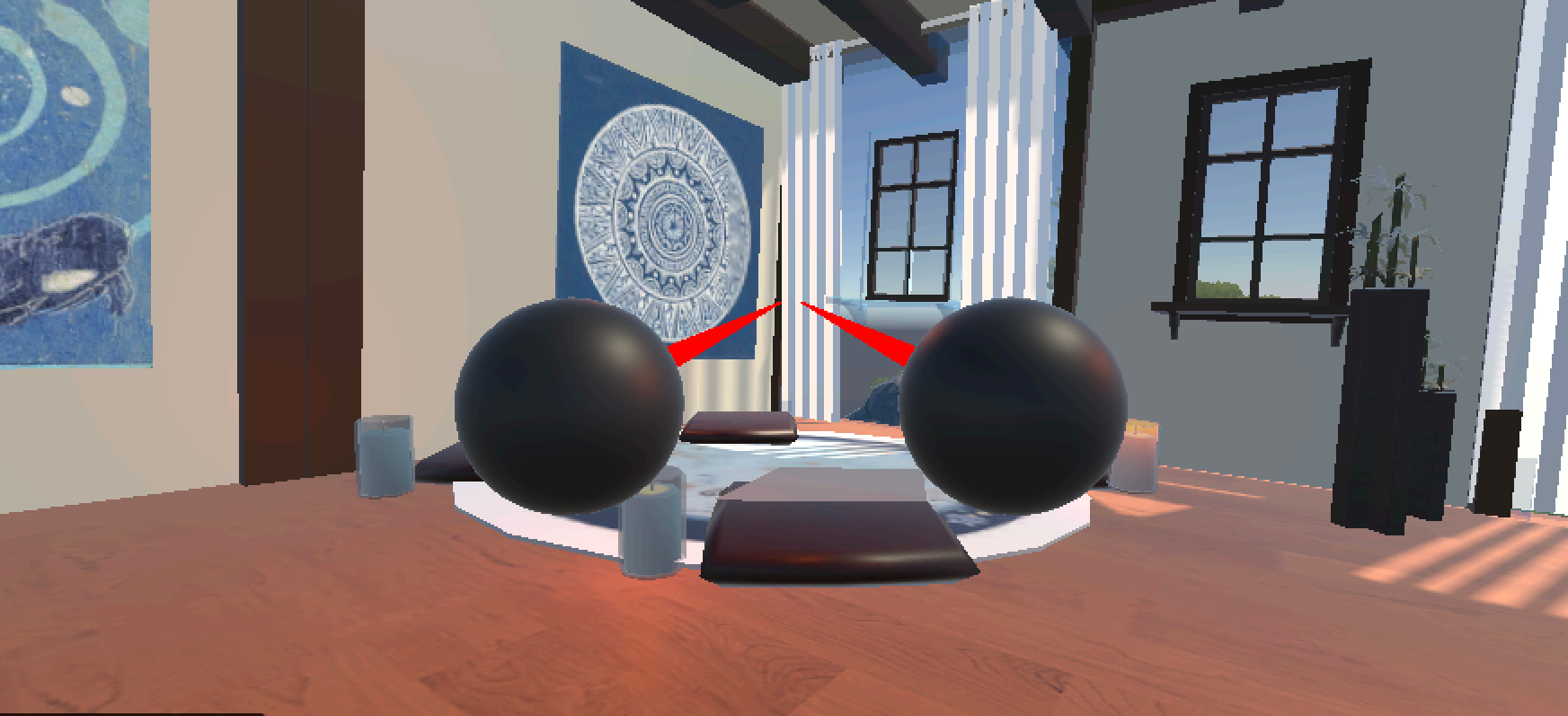
Seating & guided meditation
Cushions in a circle on a raised mat, candles for warm light, plants for softness. Waterfall and wind loops carry the space as much as the visuals do.
What it does
Guidance walks users to a cushion, then the environment dims and the session begins. The circle is deliberate: an optional group session reads as company, not an audience.
04
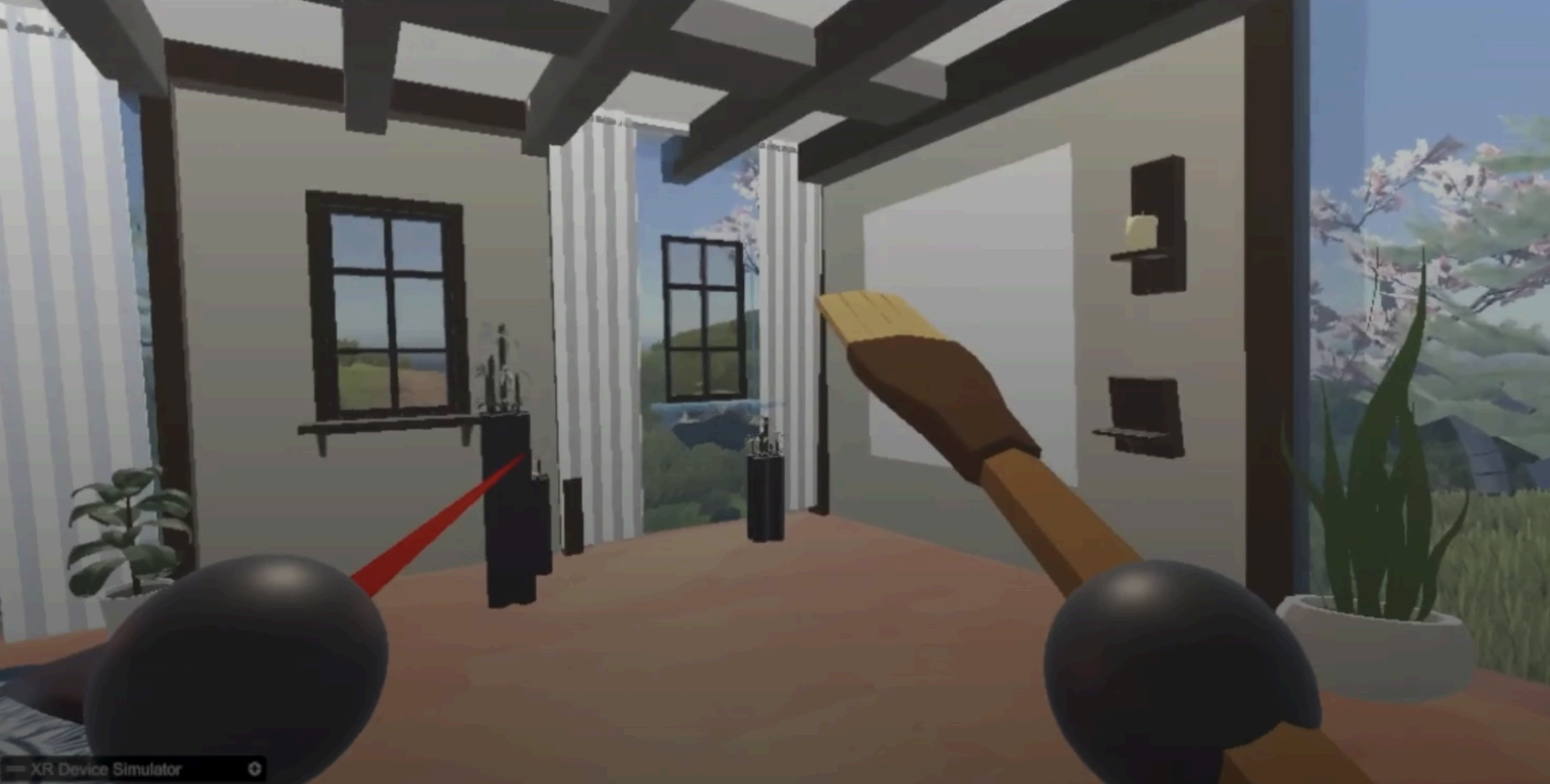
Grabbable paintbrush
The brush was coded as a grabbable object with a dedicated stand to return it to. Controller rays made picking it up the easy part; making the return behaviour forgiving took the longest.
What it does
A trigger pull grabs it, releasing near the stand puts it back — nothing can be permanently misplaced.
05
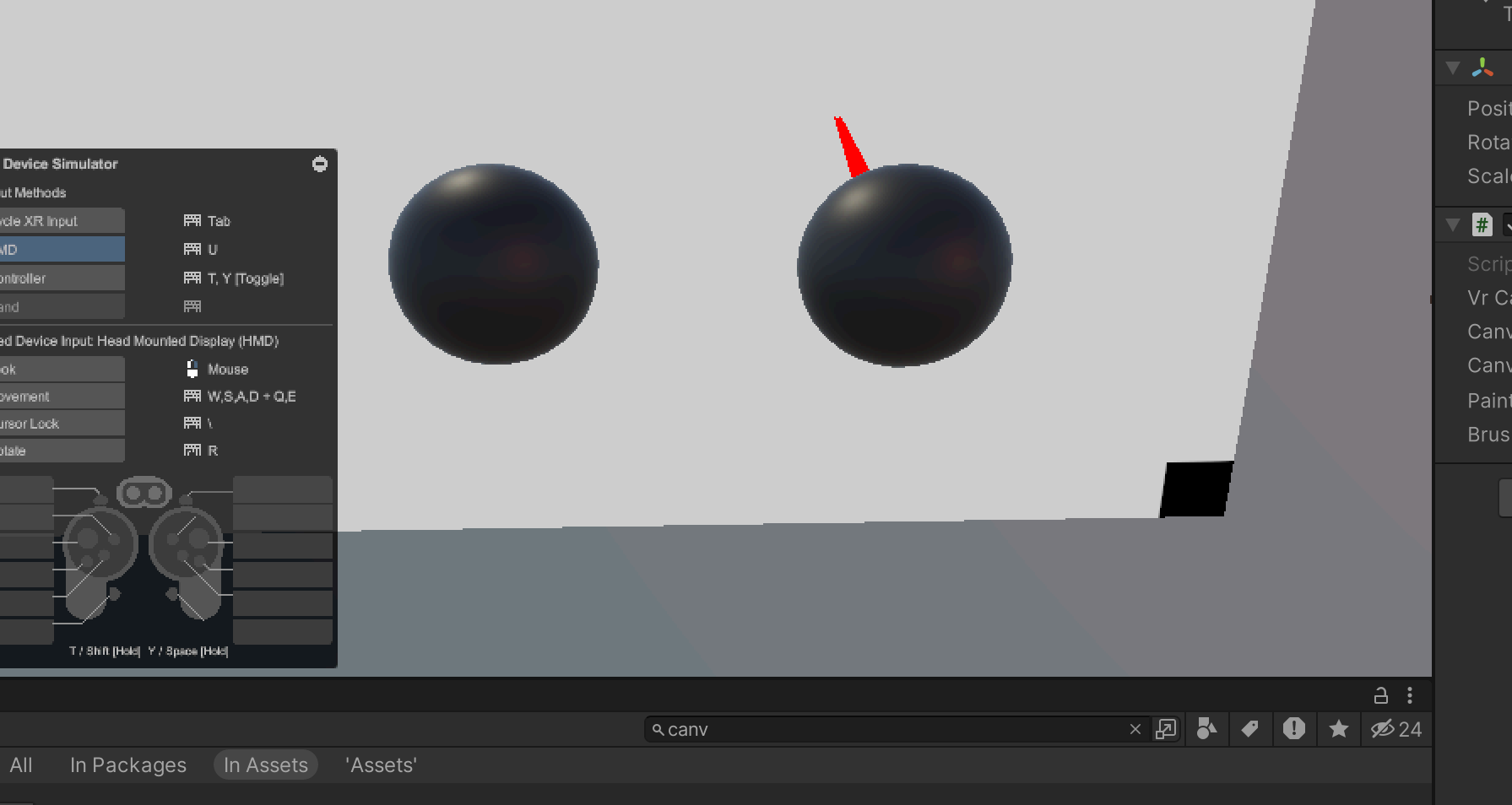
Interactive canvas
The canvas was wired to the brush so strokes actually land on it, closing the loop on the second task.
What it does
After the meditation, users are prompted to paint how the session felt — a reflective outlet that doesn't demand words.
chapter five
Test
No headsets in the room — a walkthrough video, a structured form, and a lot of listening.
User testing
Because participants didn't have headsets, we screened a walkthrough video with context and collected structured feedback via a Google Form covering demographics, VR familiarity, design and immersion, usability, and improvement suggestions.
Feedback confirmed the core bet: users want accessible, immersive wellness tools, and the concept's greatest advantage is meeting that demand without the friction of a physical retreat.
Immersion
Strongly positive — environment set the tone quickly.
Usability
Grabbable interactions read well; small onboarding tweaks needed.
Social features
Wanted, but only if opt-in and low pressure.
finale
Walkthrough
Two minutes inside the room — the environment, the audio, and every interaction end to end.
Still from the walkthrough recording used in user testing.
A full pass through the room — arriving, settling, the guided session, the brush, the canvas, and stepping back out.
It's how the project is best understood without a headset, which is exactly why we made it.
reflection
Immersion is the interface.
Research earns the design — the strongest moments in the prototype came from insights we almost skipped past. Environment, sound and pacing did more heavy lifting than any single UI decision.
And social has to be optional: the people we designed for wanted community, but on their own terms, in their own time.